Why Get Rental Income Insurance?
Charles Phanumphai • January 21, 2025
Why Rental Income Insurance is a Must for Property Investors: Winter, Spring, Summer, or Fall—Stuff Happens
As a property investor, you know the ups and downs of rental ownership. One season, you’re collecting rent checks with ease; the next, you're dealing with a burst pipe, a broken furnace, or unexpected vacancies. It's the nature of the business—no matter how carefully you plan, stuff happens. That’s where rental income insurance comes in.
What is Rental Income Insurance?
Rental income insurance is your safety net. It provides coverage for lost rental income when your property becomes uninhabitable due to covered damages, like a fire, storm, or other disasters. Simply put, it helps ensure you’re not left scrambling when life throws you (and your tenants) a curveball.
Why Every Season Brings Risks
No matter the time of year, there’s always the potential for unforeseen events that could disrupt your rental income:
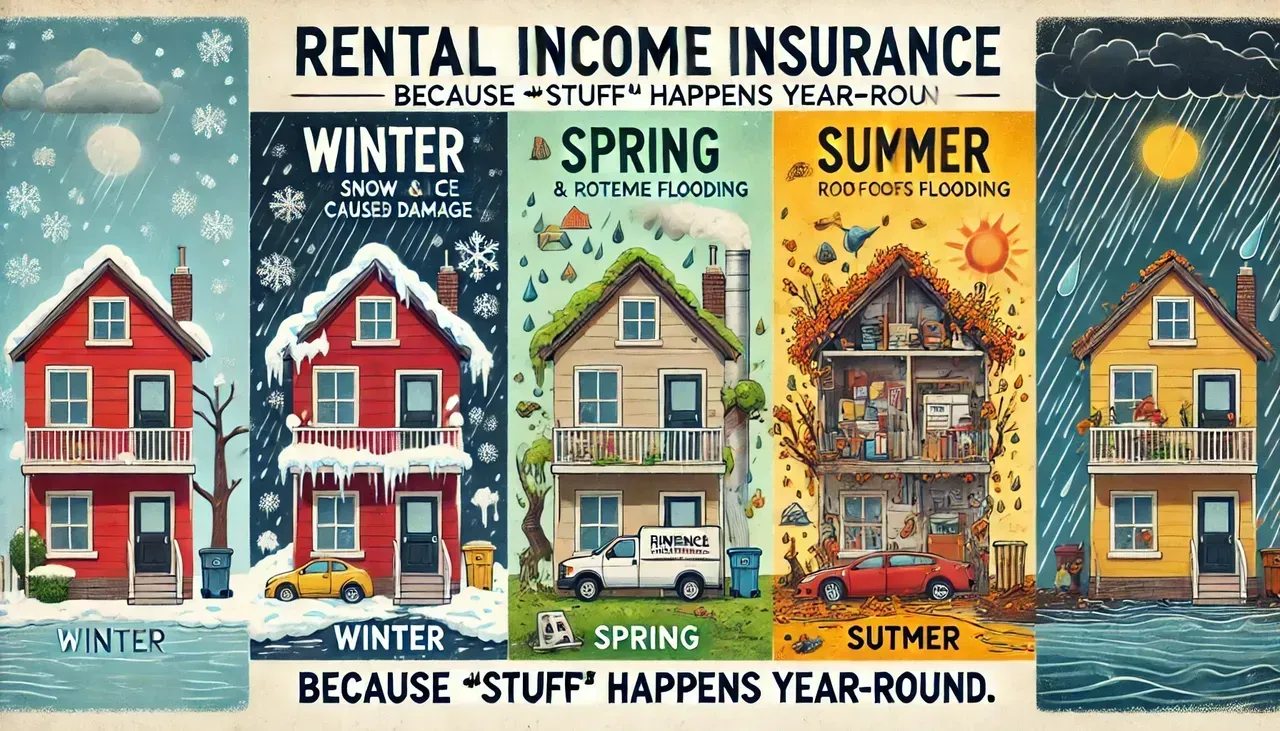
- Winter Woes: Frozen pipes, ice dams, and furnace breakdowns can render your property unlivable—and costly to repair.
- Spring Surprises: Flooding from snowmelt or heavy rain can cause water damage and delay tenant move-ins.
- Summer Scenarios: HVAC failures in peak heat waves or storm-related roof damage can make your property temporarily uninhabitable.
- Fall Frustrations: Fallen leaves can clog gutters, leading to water damage, or early snowstorms can wreak havoc on your property’s exterior.
Each season presents unique challenges, but with rental income insurance, you can weather the storm (literally and figuratively) without financial strain.
Protect Your Bottom Line
As a property investor, maintaining consistent cash flow is critical. Rental income insurance ensures that even if disaster strikes, your finances stay intact. This protection allows you to: Cover mortgage payments, Pay property taxes, Handle repairs without dipping into your savings
By shielding your income from unexpected losses, you can focus on long-term growth without the stress of short-term setbacks.
Peace of Mind for You and Your Tenants
Investing in rental income insurance isn’t just about protecting your wallet; it’s about being a responsible property owner. With coverage in place, you can ensure timely repairs and minimize disruption for your tenants. Happy tenants lead to long-term leases and a stronger reputation as a landlord.
The Bottom Line
Whether it’s a freezing winter night or a scorching summer afternoon, stuff happens. Pipes burst, storms roll in, and tenants move out unexpectedly. As a savvy investor, having rental income insurance is your way of saying, “I’m ready for anything.” It’s not just protection—it’s peace of mind.
So don’t wait for stuff to hit the fan (or the roof). Invest in rental income insurance today and safeguard your property—and your profits—year-round.

Winter Park's aerial transit system is moving through a serious planning process, and if you're renting, buying, or owning property here, it's worth understanding where things stand. Locals have heard this before. The town's own website calls this vision three decades in the making, and most of us have watched it surface and disappear more than once. What's different now is the structure: a rezoned base area, a $2 billion master plan, Alterra on record financing the gondola, and for the first time, specific design concepts in front of Town Council.

Charles Phanumphai, owner of Snow Capped Properties in Grand County, Colorado, recently shared insights on burnout, entrepreneurship, and long-term success in real estate. Charles explained that avoiding burnout starts with finding work you genuinely enjoy, while also intentionally creating balance through family time, travel, fitness, and experiences outside of work. As a business owner and father, he prioritizes being present with his children and setting healthy boundaries around work in the evenings. Charles’ journey into real estate began in 2000 when he purchased his first “house hack” while attending college. At the same time, he built a 20+ year career in IT and workforce management. Over the years, he combined those two backgrounds to create Snow Capped Properties — a vertically integrated company focused on long-term and seasonal rentals, property management, and real estate sales throughout Grand County. He credits much of his success to three key principles: analyzing data, taking calculated risks, and trusting the process. His IT background helped shape a data-driven mindset that allows him to make strategic decisions based on market trends, rental performance, and long-term investment fundamentals rather than emotion. He also emphasized that success did not happen overnight, but instead came through years of consistent, disciplined progress. Charles also discussed the importance of adaptability in today’s evolving real estate market and the value of building long-term relationships rooted in professionalism, transparency, and trust. For those interested in reading the full interview/article with Bold Journey, click HERE

At Snow Capped Properties, we believe in fair, equal access to housing for everyone. Fair Housing laws are designed to ensure that all prospective tenants are treated equally—regardless of factors like age, family status, gender, religion, national origin, or disability. What does this mean for you? Simply put, rental listings and conversations should focus on the property itself—not the person applying. For example, you won’t see language like “perfect for families” or “ideal for professionals.” Instead, you’ll see descriptions such as “close to parks and amenities” or “easy access to commuter routes.” This ensures that no one feels excluded and that everyone has an equal opportunity to consider a home. You may also notice that accessibility is described in terms of features—like stairs or layout—rather than assumptions about who can or cannot live there. This approach keeps the process transparent and inclusive. Fair Housing standards apply everywhere, including online listings and social media. By focusing on facts, features, and location benefits, we help create a fair and consistent experience for all renters. At Snow Capped Properties, this isn’t just about compliance—it’s about doing what’s right. Our goal is to provide a respectful, transparent process and help you find a home that fits your needs. If you ever have questions, we’re here to help. Source: Based on educational material from The CE Shop Fair Housing Guide.

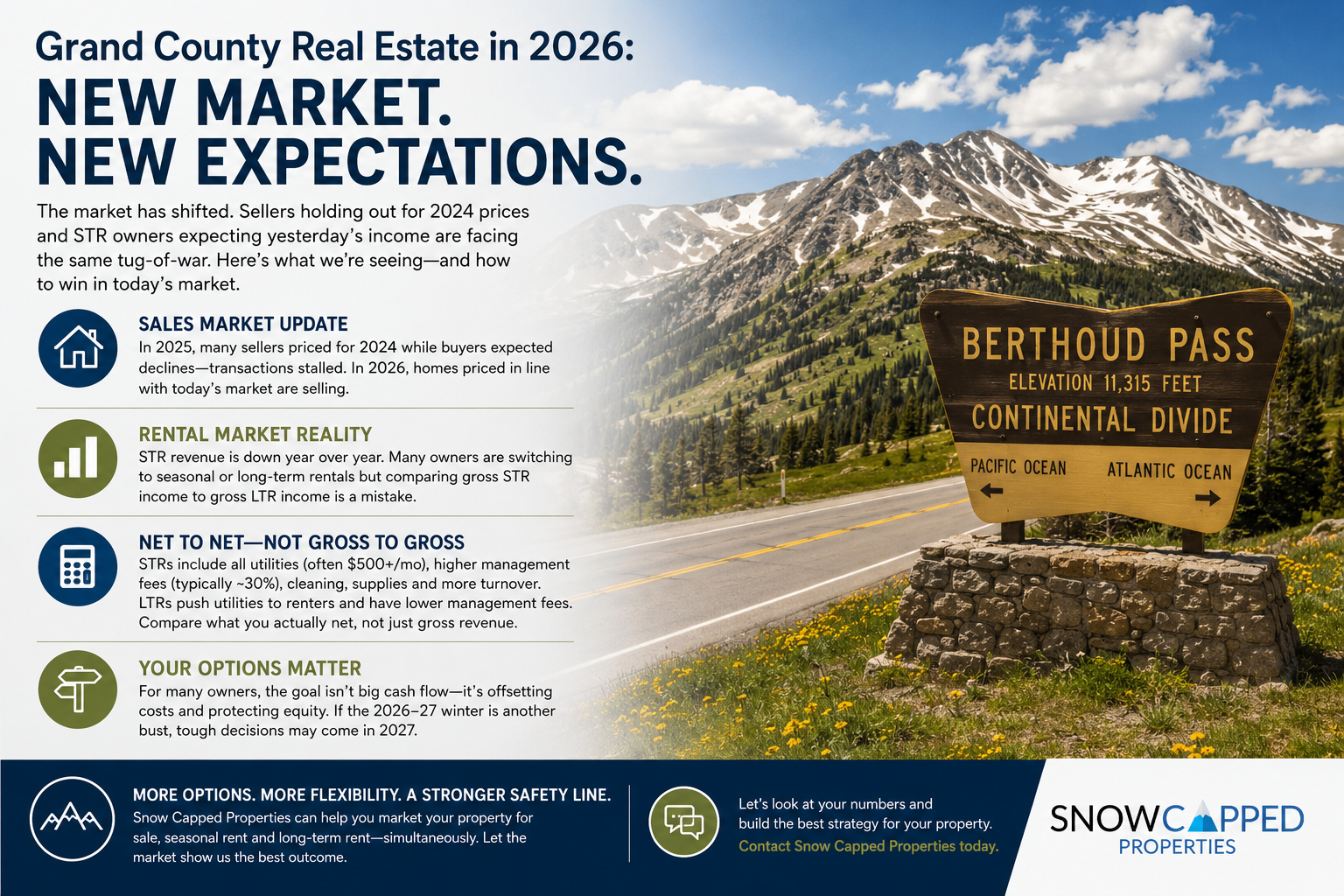
Vertical Integration and Real Estate Resilience - I recently had the opportunity to sit down with Will Carr on his podcast to share more about my journey building Snow Capped Properties in Grand County, Colorado—and how adaptability has been the key to navigating a constantly changing real estate market. One of the biggest inflection points for our business came after the East Troublesome Fire. While it was a devastating event for the community, it also created an unexpected surge in demand for insurance-funded relocation housing. That moment reinforced something I’ve always believed: in real estate, challenges often create new opportunities—if you’re positioned to respond. Why We Focus on Midterm & Seasonal Rentals - At Snow Capped, we’ve intentionally leaned into 6–9 month rental strategies. This allows us to serve ski-season demand in the winter and what I call “heat refugees” in the summer—people escaping hotter climates. This niche has allowed us to remain stable while many traditional short-term rental (STR) models have struggled. The Reality of Today’s Market - We’re seeing significant shifts in Grand County. Short-term rentals are facing pressure from oversupply and changing travel behavior, with many owners experiencing notable year-over-year revenue declines. At the same time, high interest rates and elevated home prices are pushing more people into renting—what I refer to as the rise of a “renter nation.” The Power of Vertical Integration - One of the most important decisions I made was expanding beyond property management into buying and selling real estate. This vertical integration allows us to guide clients through the entire lifecycle—whether they’re renting, holding, or selling—without needing to leave our ecosystem. A Bigger Picture Approach - If there’s one perspective I always come back to, it’s this: real estate rewards those who think long-term. When you zoom out over a 10–30 year horizon, short-term market fluctuations become much less significant, especially if your properties are generating consistent income and building equity. What Really Drives Success - Success in this business isn’t just about capital—it’s about people. Having the right local knowledge and relationships makes all the difference. At the same time, I believe in staying curious. Even as you become an expert in your field, you have to be willing to challenge your own assumptions and adapt when the market shifts. The “Good Life” Philosophy - At the end of the day, real estate is just a vehicle. The goal is financial independence—not just for wealth, but for freedom. Freedom to be present with your family, your community, and the things that matter most. Living below your means and staying in “learn mode” are two principles I’ve tried to carry throughout my journey. And of course, we wrapped things up with some fun—talking about superpowers, time travel, and whether we might one day live to 250. If you’re interested in the full conversation, I’d encourage you to check it out. It’s a deeper dive into how we’re thinking about real estate today—and where we see opportunities moving forward. https://www.youtube.com/watch?v=OLEcFg8_JxY